
AFRICA RISING
Nyayo Philosophy: Peace, Love, & Unity
In Memory of His Late Hon.Thomas Sankara.
Sankara Lives.
MERU
ETHNONYMS: Ameroe, Ameru, Mumeru, Kimeru, Mero, Meroe, Sumeru
The Meru People
The Meru are people who live in the Mount Kenya region one of the most fertile places region in Kenya. They specifically live on and adjoining the north-eastern slope of the mountain. Mt. Kenya is the second highest mountain in Africa its summit reaching 5,199 metres behind Tanzania’s Mt.Kilimanjaro at 5,895 metres. (the difference in their height is approximately 700metres). When the British colonized Kenya they mainly settled in and around Mount Kenya region due to its fertility and beauty, a move that greatly affected the life of the native inhabitants who were the Ameru and Agikuyu communities. Prior to the colonial era, the name ‘Meru’ referred only to five of the present nine Ameru sub tribes; Igembe, Tigania, Imenti, Muitini and Igoji. British administrators would later include the neighboring Tharaka, Mwimbi, Muthambi and Chuka. (I think the whites might have also been subconsciously rewriting history like everyone one of us, though not performing well to the point of their own engineered pandemic taking them and their close associates out in numbers. Even your people are tired)
Meru History and Oral Tradition
Meru history spans approximately three centuries, although the first two hundred years are documented solely through oral testimony therefore cannot be accepted unquestionably. However, it is oral testimony that forms the raw material from which to derive true history. One such myth is that of the origin of the Meru, from which we learn the Mbwa tradition as it is the most popular.
The Mbwa Tradition
The Mbwa tradition claims that the Meru migrated to the Mount Kenya region from the island of the Mbwa, which is considered by many historians to be off the coast of the Indian Ocean. Around the year 1700 Mbwa was attacked by the red people (Nguuntune). The Meru were held in captivity until a great leader organized their escape across receding waters. The Meru then migrated along the Tana River, reaching the base of Mount Kenya, Tigania, and Nyambene in the 1730s. Despite not having had contact with the British who were spreading Christianity, the Ameru story of creation, like some other native communities spread across different regions of the world shares a lot of similarities with the Biblical story of creation. For example the aforementioned brief of the origin of Ameru people shares an uncanny similarities with the biblical story of Moses.
Mount Meru
Tanzania’s Mount Meru which shares the name with the Meru is a mountain located 70km west of Mt. Kilimanjaro. Mount Meru, also recognized as Sumeru, Sineru or Mahameru is a mythological golden mountain regarded as axis or centre of the world in both Hinduism and Buddhism. The "Sumeru Throne" 須彌座 xūmízuò style base is also a common feature of Chinese pagodas (form of a many-tiered tower). Sanskrit/Pali: मेरु, also recognized Mount Meru as Sumeru, Sineru or Mahāmeru, is the sacred five-peaked mountain of Hindu, Jain, and Buddhist cosmology and is considered to be the center of all the physical, metaphysical and spiritual universes. In Hinduism, Mt. Meru also centre of the world appears in many myths in the purāṇas, where it is placed in the Himālayas. In Buddhism, Meru is important in a diagrammatic visualization of the process toward (or away from) enlightenment.
Meroe
A considerable number of academic literature on the Meru community refer to the Ameru as Ameroe. In consideration of the mythical story of the origin of Ameru having an uncunny resemblance with the biblical story of Moses it can be reasonably assumed that they have ties with the Ameroe of the Meroe. Meroe is an ancient city of northern Sudan on the Nile River northeast of Khartoum. According to historical records, Meroe is said to be the capital of a Cushite dynasty from 530 BC to AD 350 and was noted for its iron smelting and casting. Meroë was basically the base of a flourishing kingdom whose wealth was centered on a strong iron industry, as well as international trade involving India and China.
Keeping in minding that as previously mentioned, Hinduism and Buddhism regarded mount Meru as the centre of the world. and based on history we can also see that ancient India and China traded with the Meroe therefore it is reasonable to say that they might have also travelled further inland into East Africa and therefore interacted with the cultures of this region.
Ancient Egypt
Ancient Egypt was a civilization of ancient North Africa, concentrated along the lower reaches of the Nile River around 3100 BC. And unlike the Meroe, there is numerous historical data that prompted indepth research and therefore knowledge about the lifestyle of ancient Egyptians.
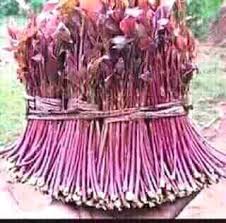
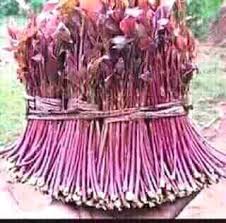
One such culture is that of using khat/miraa. Khat is a psychedelic herb cultivated by the Meru specifically and predominantly the Igembe subtribe. It is important to note that even though Khat is also cultivated in other regions in the horn of Africa and in some regions of Arabia specifically Yemen, and even though khat is documented to have originated from Ethiopia, until today, it is commonly accepted among users who have had the chance to compare the Meru strain is the most potent Khat.
Khat
Point 1
Ancient Egyptian imperial cults considered the khat plant a sacred substance, which was capable of realizing a user's divinity. These early Egyptians consumed the plant ceremoniously in attempts to transcend into "apotheosis" and or garner and manifest mystical experiences, systemic trances, and other metaphysical experiences rather than habitual recreational use or abuse. Sufis/priests also used it to intensify their mystical experience and to facilitate a sense of union with God.
Point 2
Mount Meru (Sanskrit/Pali: मेरु), also recognized as Sumeru, Sineru or Mahāmeru, is the sacred five-peaked mountain of Hindu, Jain, and Buddhist cosmology and is considered to be the center of all the physical, metaphysical and spiritual universes.
Point 3
As previously mentioned according to the Sanskrit Mount Meru is the sacred five-peaked mountain… Earlier in this text it is seen that “Prior to the colonial era, the name ‘Meru’ referred only to five… Ameru sub tribes..”
Analysis of points 1,2 & 3
In the first two points we can see the connection. Khat was used in realizing a user's divinity/ union with God, metaphysical etc.Is it reasonable then to agree that Khat or at least the most potent strain of Khat the one from Meru-used to realize a users union with God. While Mount Meru was considered by Hindu, Jain, and Buddhist cosmology to be the center of all the physical, metaphysical.
Looking at the 3rd point it is then reasonable to consider the connection between Mount Meru-five-peaked, and the Ameru’s five sub-tribes.
N/B In the understanding that there is the prevailing factual consideration that Mount Meru is in Tanzania. This point like many other claims in this text is subjected to application of logic and reasoning in the interpretation of the information in the next few paragraphs.
In consideration of the association of khat (reasonably assumed to have been grown in Meruland) with the metaphysical and divinity is it then within reason to try and understand this land where this potent strain of khat is being grown?
Nyambene Hills
Nyambene hills is considered as the ancestral home of Kenya’s khat/miraa. This mountain range runs northeast of Mount Kenya, and forms ‘an elongated, extruded volcanic feature, which rises sharply above the surrounding plateau surface to a height of about 8,200 feet at its southern crest’. A British Goldsmith describes its appearance as follows: The Nyambene region has a rather fantastic appearance. When viewed from afar the hills and caldera form a geometry of soft curves, angles, and conical shapes. Tropical alpine forest caps the peaks and upper hillsides of the range. The plains below are punctuated with lunaresque massifs dominated by the Gibraltar-like silhouette of Shaba imposed in front of the hills of Samburu country in the distance. The local farms situated in-between the forest and the plains resemble small jungles, a dense riot of vegetation with the crooked boles of mwenjela (Cussonia holstii) trees projecting above the canopies like fringed stovepipes. (Goldsmith, 1994)
Mount Meru
The dimensions attributed to Mount Meru — which all refer to it as a part of the Cosmic Ocean, along with several other statements that describe it in geographically vague terms (e.g., "the Sun along with all the planets circle the mountain") — make the determination of its location most difficult, according to most scholars.
According to Charles Allen, Mount Kailash is identified with Mount Meru. One description in the Vishnu Purana of the mountain states that its four faces are made of crystal, ruby, gold, and lapis lazuli.It is a pillar of the world and is located at the heart of six mountain ranges symbolizing a lotus.
Mount Kenya
Nyambene Hills Panorama ( https://peakvisor.com/peak/nyambene-hills.html )
Nyambene Hills is one of the major water towers in the Tana and Ewaso Nyiro River drainage basin. It is located in Meru County and lies within four sub-counties: Tigania Central, Tigania East, Tigania West and Igembe Central
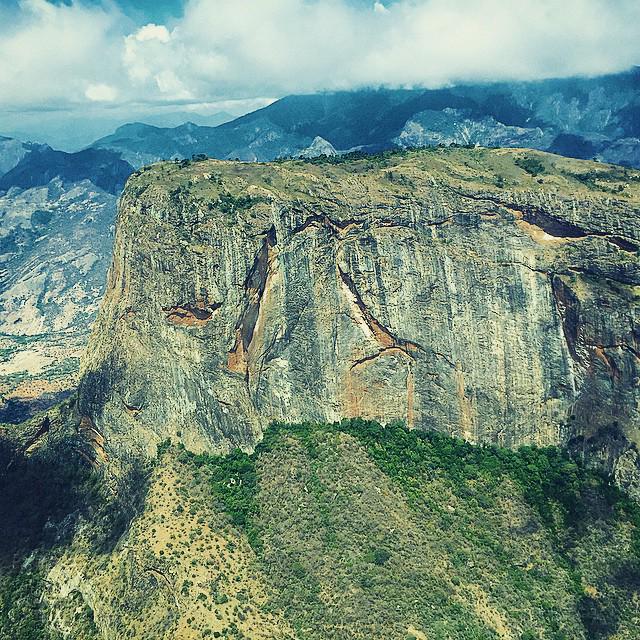
Nyambene hills Cordinates is 0.233568N 37.875815E is lined with six notable peaks. These are the peaks that are over 6,000ft. My focus will be one of them. This peak is called Mount Poi which is 6286 ft in height. Mt Poi resembles the world's largest bread loaf from some angles. We all know the historical and cultural significance of bread based on most if not all religious texts.
The Science
6286 number is the number allocated to the S100P S100 calcium binding protein P [ Homo sapiens (human) ] also Gene ID: 6286
Nyambene Hills Cordinates is 0.233568N 37.875815E. Here let us take out the decimal and work with 233568. And North be in reference to the conventional translation meaning up, skywards, into the starts/cosmos. And let us round off 233568 to 234,
Based on meteorological observations there is the minor planet 234 called Barbara.
Barbara (minor planet designation: 234 Barbara) is a main belt asteroid that was discovered by German-American astronomer Christian Heinrich Friedrich Peters on August 12, 1883, in Clinton, New York. The object is orbiting the Sun with a semimajor axis of 2.385 AU, a period of 3.68 years (Earths one year is 365 days), and an eccentricity of 0.25. The orbital plane is inclined by 15.37° to the plane of the ecliptic. It is classified as a stony S-type asteroid based upon its spectrum. The mean diameter of this object is estimated as 45.6 km. It has a rotation rate of 26.5 hours, or a little over a day (Our earth day is 24hrs). Observations made in 2009 with ESO's Very Large Telescope Interferometer (VLTI) suggested that 234 Barbara may be a binary asteroid.
Asteroid 234 Barbara
234 Barbara = stony S-type asteroid
The letter ⟨s⟩ is the seventh most common letter in English and the third-most common consonant after ⟨t⟩ and ⟨n⟩. It is the most common letter in starting and ending (also beginning and the end) position.
S also Theta Θ
The lowercase letter θ is used as a symbol for:
- Threshold value of an artificial neuron
- The Watterson estimatorfor the population mutation rate in population genetics
An artificial neuron is a connection point in an artificial neural network. Artificial neural networks, like the human body's biological neural network, have a layered architecture and each network node (connection point) has the capability to process input and forward output to other nodes in the network.
The uppercase letter Θ is used as a symbol for:
- A certain ordinal numberin set theory
- Pentaquarks, exotic baryonsin particle physics
As quarks have a baryon number of +1/3, and antiquarks of −1/3, the pentaquark would have a total baryon number of 1, and thus would be a baryon. Further, because it has five quarks instead of the usual three found in regular baryons (a.k.a. 'triquarks'), it is classified as an exotic baryon. The name pentaquark was coined by Claude Gignoux et al. (1987), and Harry J. Lipkin in 1987;however, the possibility of five-quark particles was identified as early as 1964 when Murray Gell-Mann first postulated the existence of quarks.
Although predicted for decades, pentaquarks proved surprisingly difficult to discover and some physicists were beginning to suspect that an unknown law of nature prevented their production.
Pentaquarks also could be produced naturally by supernovae as part of the process of forming a neutron star. The scientific study of pentaquarks might offer insights into how these stars form, as well as allowing more thorough study of particle interactions and the strong force.
Strong force-In nuclear physics and particle physics, the strong interaction is the mechanism responsible for the strong nuclear force, and is one of the four known fundamental interactions, with the others being electromagnetism, the weak interaction, and gravitation.
The strong nuclear force holds most ordinary matter together because it confines quarks into hadron particles such as the proton and neutron. In addition, the strong force binds these neutrons and protons to create atomic nuclei.
Strong force- nuclear force
- A brain signal frequency(beta, alpha, theta, delta) ranging from 4–8 Hz
S ΘSymbolism
Greek eighth letter- symbol of death
Egyptians used an X within a circle as a symbol of the soul; having a value of nine, it was used as a symbol for Ennead. Johannes Lydus says that the Egyptians used a symbol for Kosmos in the form of theta, with a fiery circle representing the world, and a snake spanning the middle representing Agathos Daimon (literally: good spirit).[3]
The Egyptians also used the symbol of a point within a circle (, the sun disc) to represent the sun, which might be a possible origin of its use as the Sun's astrological glyph. It is worthwhile to note that θῆτα (theta) has the same numerical value in isopsephy as Ηλιος (Helios): 318.
Value of nine=Gikuyu Creation Story, 9 daughters of Agikuyu and Mumbi
Have Done My Part, Now To Be Edited, Added Upon, and Continued As You See Fit…….Continue Creating Your World.
Author
This is subject to interpretation; reason dictates you interpret within reason. I think by now we all clearly know, see and feel the fruits of not reasoning together. This paper is nothing of my own but just a series of Continuous Nero Network logic of connections of information that is now at our fingertips and not forgetting the Situational Energies Around Being Felt Everywhere. Our Making.
.................................OPEN SOURCE...................................
References
One can copy & paste any above infor into search engine to decide the Reference(s).
Amor Fati